

Ye olde 'reply guys'
What Instagram stories have in common with 1870s acquaintance cards

How would one flirt in the 1870s? Surely, if I saw a pretty Victorian woman across the promenade or ballroom or whatever, I could approach her and strike up a conversation. I could say, “You carry yourself with great grace, madam.” Although, flirting in public was extremely daring. Immodesty risked social standing, and social standing was everything. So instead, I may slip her an acquaintance card.
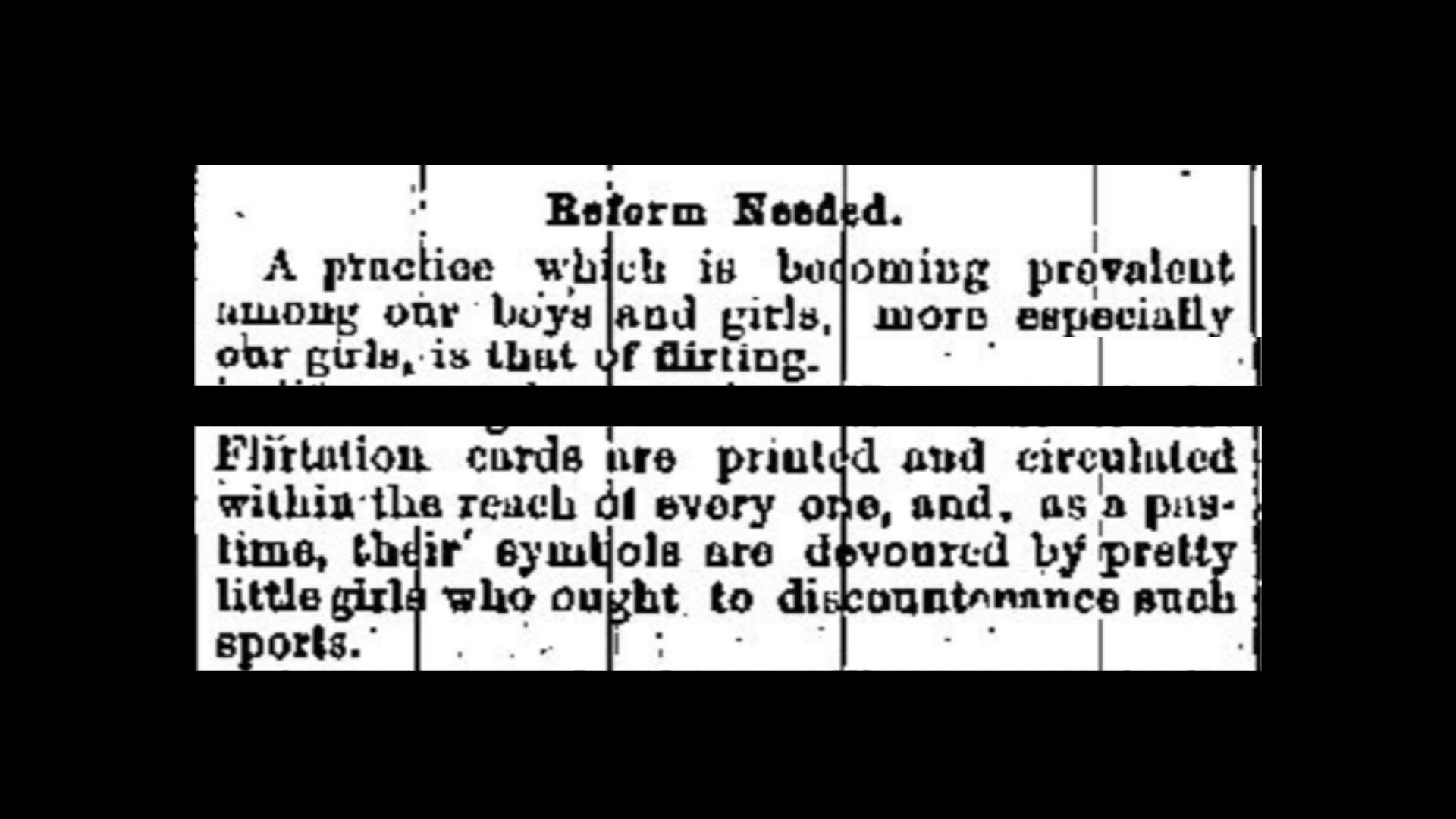
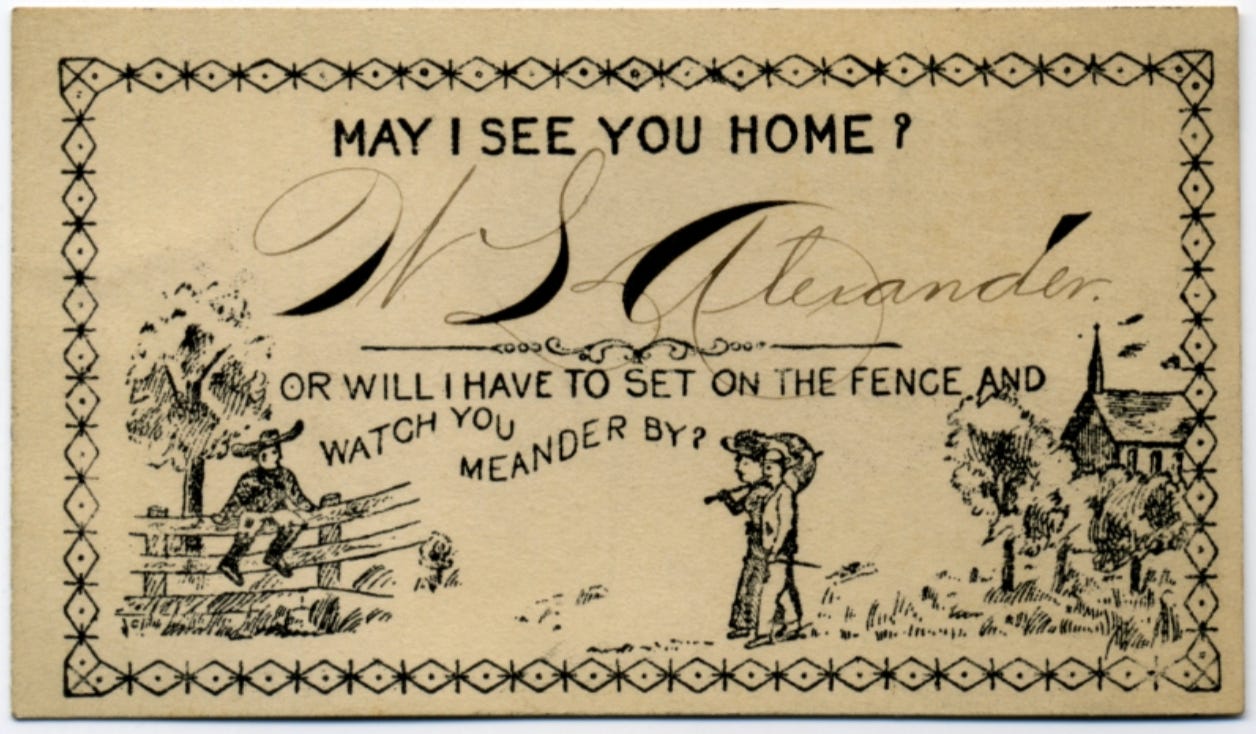
The Encyclopedia of Ephemera defines the acquaintance card as a play on the American calling card of the 1870s and ‘80s “used by the less formal male in approaches to the less formal female.”1 They usually included some illustrations and a pick-up line of sorts (with some really good typography). Some of them were mostly innocuous (“May I see you home?”). Others were a bit more direct. For the most part, they were ways to “cheekily bend the rigid rules of social interaction and sidestep existing formalities.”2 Here are a few of my favourites from this collection by Alan Mays.
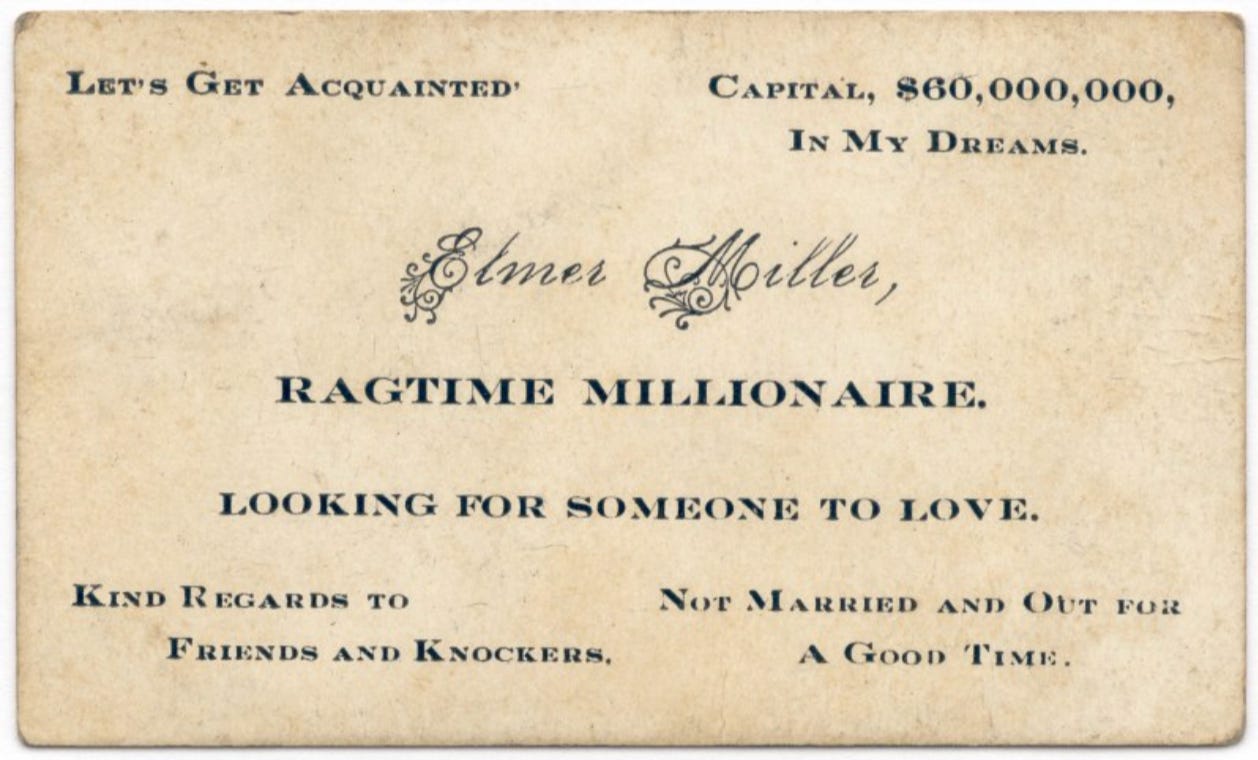
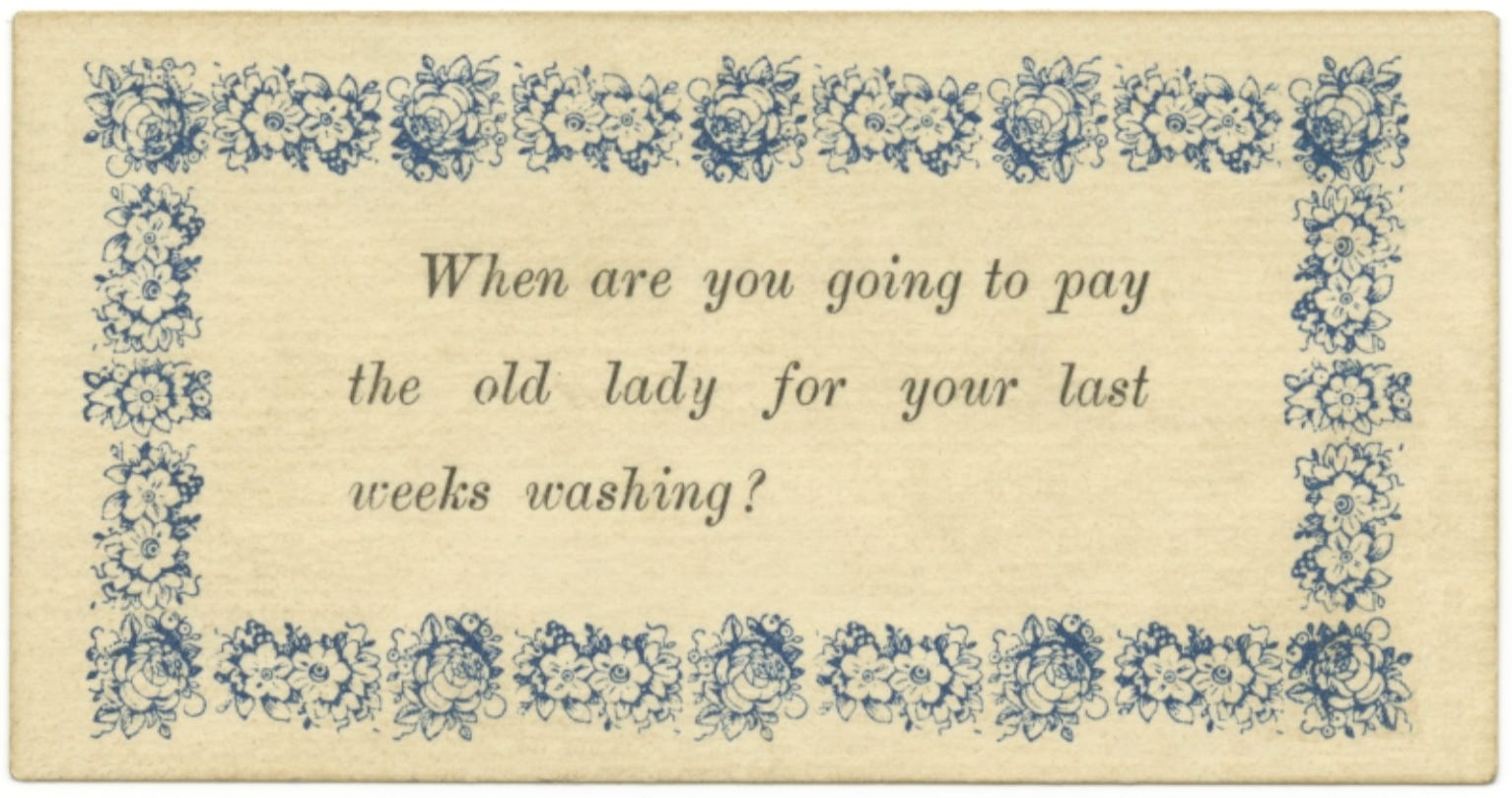
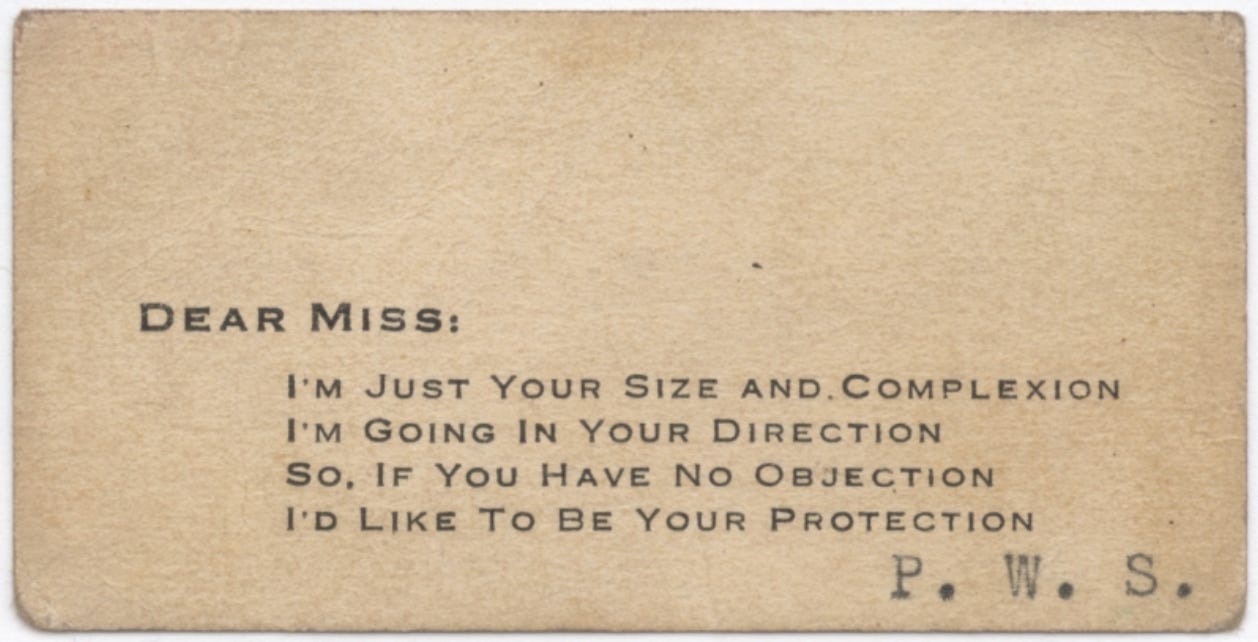
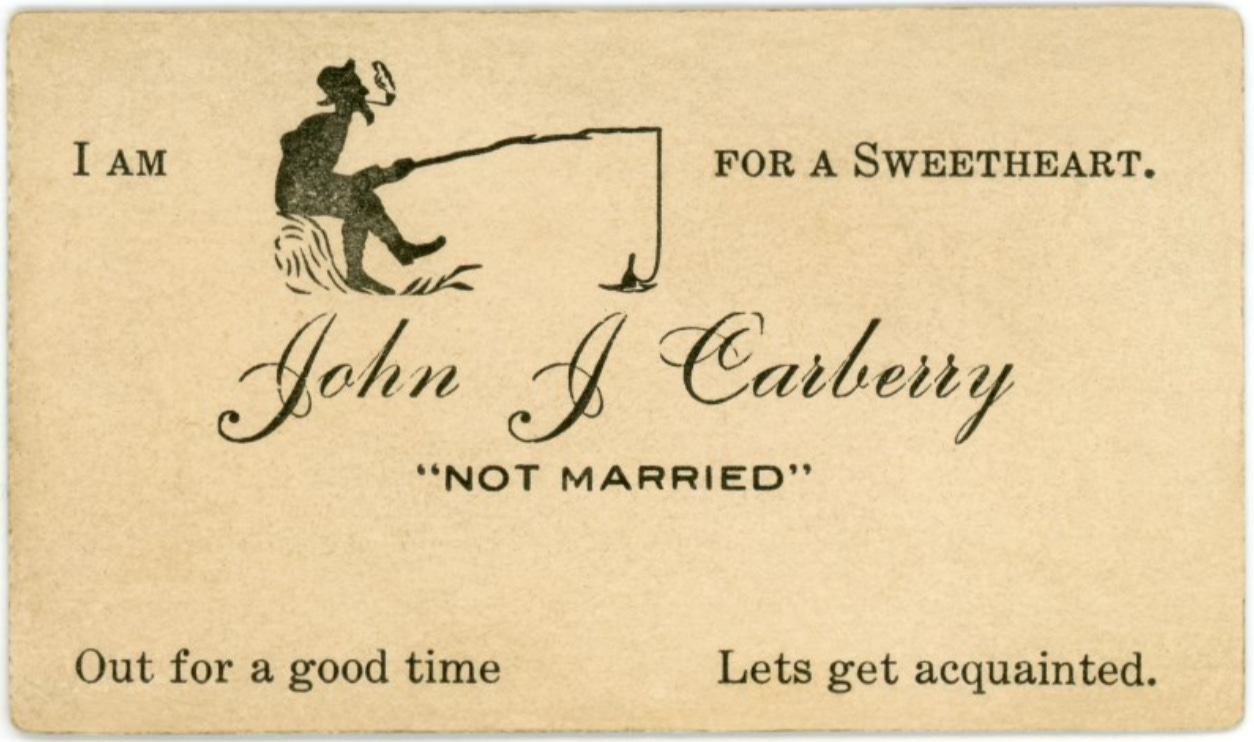
Fast forward to the 21st century. Acquaintance cards are out (although I'd be lying if I said I wasn’t considering making my own). The mediums have changed. For better or for worse, social media represents the primary way we engage and foster relationships with new people. And though our social decorum has changed, it has not been eliminated. The invention of ways to, again, “cheekily bend the rigid rules of social interaction and sidestep existing formalities,” persists.
On Instagram, certain interactions are public. If I like your post, everyone who comes across your post will see that I liked it. God forbid I comment a cheeky little pickup line because that interaction becomes publicly cemented. Our platforms enforce a digital etiquette — what is considered playful versus overstepping. Breaching those norms can bring judgment or shame, just as a misjudged compliment in 1870 could ruin your reputation.
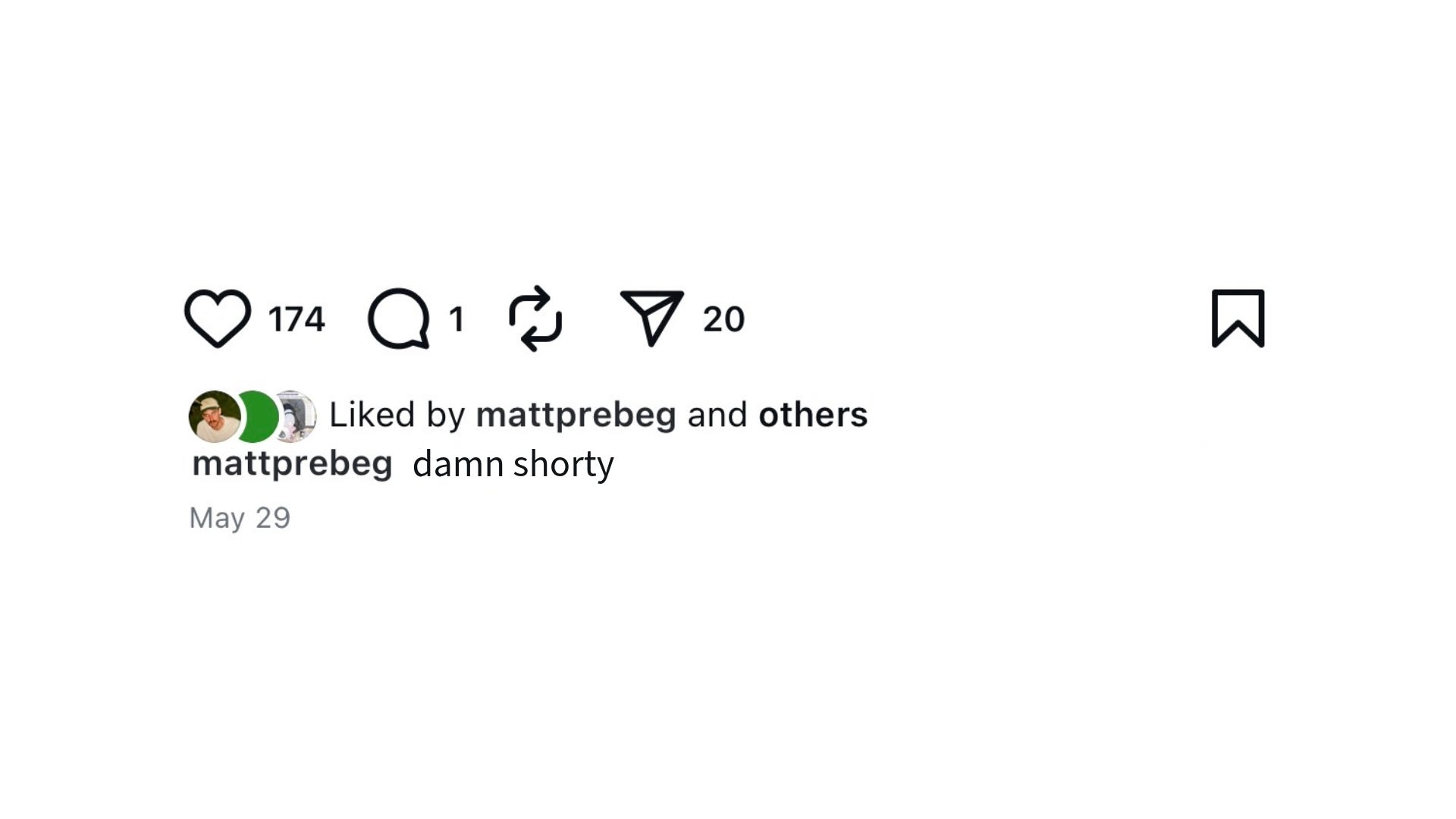
When Instagram introduced stories in 2016, a new set of norms also emerged. Stories are only viewable for 24 hours, and any interaction with a story is a private exchange. No one else can see if I like your story, or send a flirty reply. The risk of public judgment is lower, so norms shift: it became acceptable to be a little more playful. Like passing you my acquaintance card, Instagram stories introduce an entirely new medium of ephemeral, discreet, and socially sanctioned interactions.
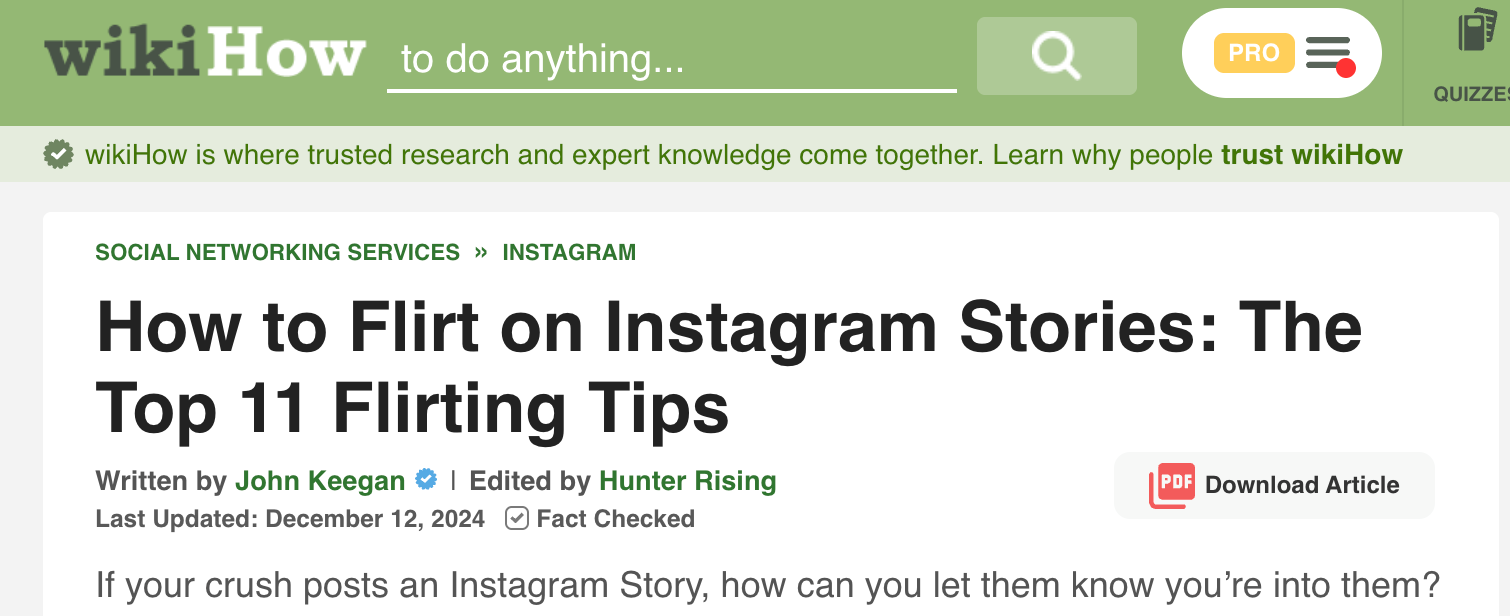
Of course, this involves a degree of playing the game. If I were to explain to my parents the Hidden Politics of Instagram Story Liking, they’d probably think I need to spend less time on my phone (and they’d probably be right). But the internet is filled with discussions aimed at dissecting these social norms: Reddit posts asking if liking a story means “shooting your shot”, TikToks explaining the real reason a guy likes your story, even a WikiHow article on How to Flirt on Instagram Stories. Point is: social norms emerge from the mediums and players involved.
In 2019, Dictionary.com officially added the term “reply guy” to their slang glossary. If you’re unfamiliar, a reply guy is someone who excessively (and often annoyingly) responds to social media posts of someone they don’t know that well. The reply guy phenomenon is a perfect illustration of these shifting norms. In a digital environment of ephemeral stories, it’s easier (and often encouraged) to insert yourself into someone’s attention sphere. Social norms around attention and flirtation adapt accordingly, creating a space where being a little bold (slash annoying) is acceptable. In other words, Stories changed the ways we participate in the social rules of the internet.
Both Instagram story interactions and acquaintance cards are:
discreet social gestures to show interest
time-limited
determined by the medium
determined with the context
modes of co-designing social etiquette
TLDR; reply guys have been around for at least 150 years.
Thanks for reading :) I post here and on other platforms about digital culture, art, design, research, new media, data, pop culture, the direction the wind is blowing, sunrises, chess, and maybe other things. Please feel free to stay connected here and elsewhere.
Ambiently,
Matt
Joanie Dickinson (2016). Acquaintance Cards: A Humorous Approach to Introductions.
Becky Little (2016). Saucy ‘Escort Cards’ Were a Way to Flirt in the Victorian Era. National Geographic.
INCREDIBLE ARCHIVAL WORK HAPPENING HERE
<3 if only instagram story likes were as cute though...